The Pillars Young Preschool Program
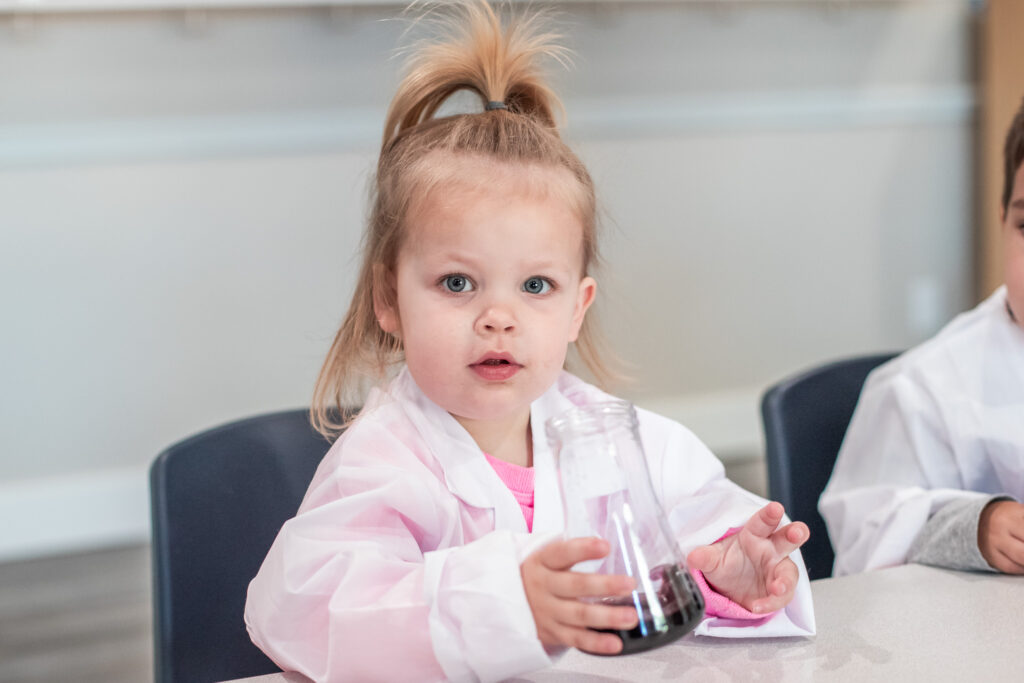
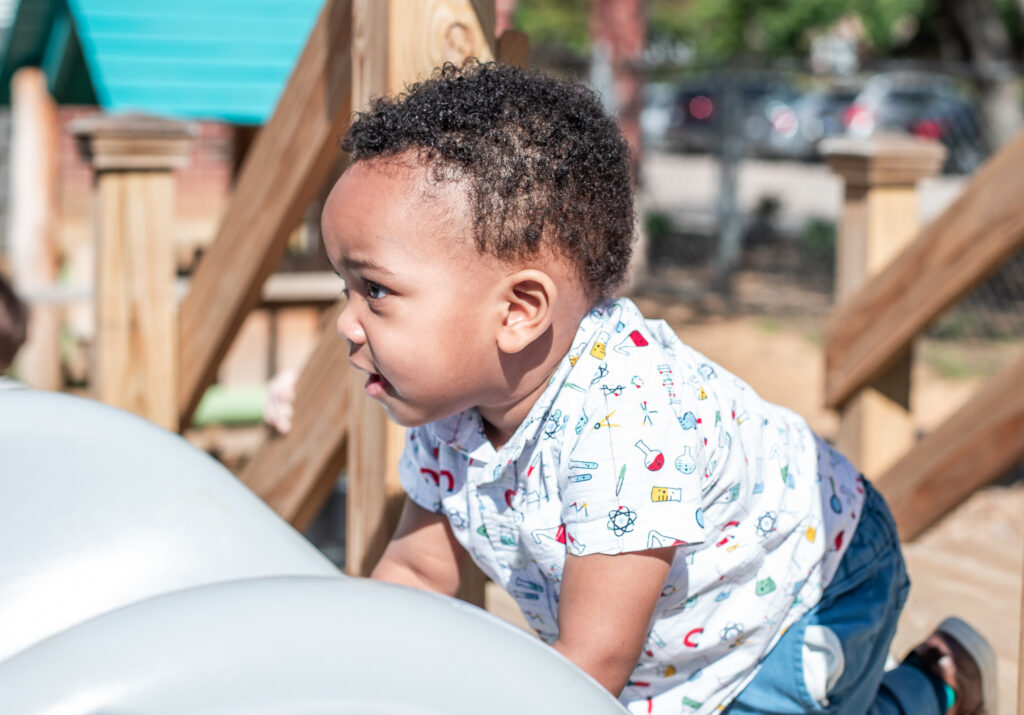
Our Young Preschool classroom (two- and three-year-olds) is a place where curiosity is nurtured, routines begin to take shape, and social-emotional growth is supported every step of the way. At this age, children are eager to explore their surroundings and express their independence, and our thoughtfully designed environment encourages just that.
We focus on building foundational skills that set the stage for future learning—including increased communication, following directions, and engaging in group routines. Our experienced teachers guide children with patience and consistency, helping them gain confidence, develop friendships, and learn how to navigate a classroom community.
This is a special stage where big leaps happen—both socially and developmentally—and our Young Preschool classroom supports:
- Language development and early literacy skills
- Counting and learning math concepts
- Self-help skills like handwashing
- Using the restroom
- Building autonomy and independence
- Development of gross and fine motor skills
- Building with blocks and creating with playdough
- Expanded physical play
- Learning how to ask for and give help
Young Preschool Class Developmental Benchmarks
Our Young Preschool class focuses on specific developmental and spiritual benchmarks.
Language Development & Early Literacy Skills
- Knowing first name, age, and gender
- Naming pictures
- Repeating parts of songs and rhymes
- Following simple directions
- Speaking so that others can understand
- Using short sentences to convey simple ideas
- Beginning to recognize and name classmates
- Showing rapid growth in number of words used in conversations
- Asking questions frequently
- Pretending to read books aloud
Mathematics
- Recognizing numbers 1-5
- Rote counting to 10
- Knowing age and holding up correct number of fingers
- Sorting by color and size
- Recognizing concepts of more/less, big/small, near/far
Health & Wellness
- Showing interest in toileting
- Washing and drying hands (with assistance)
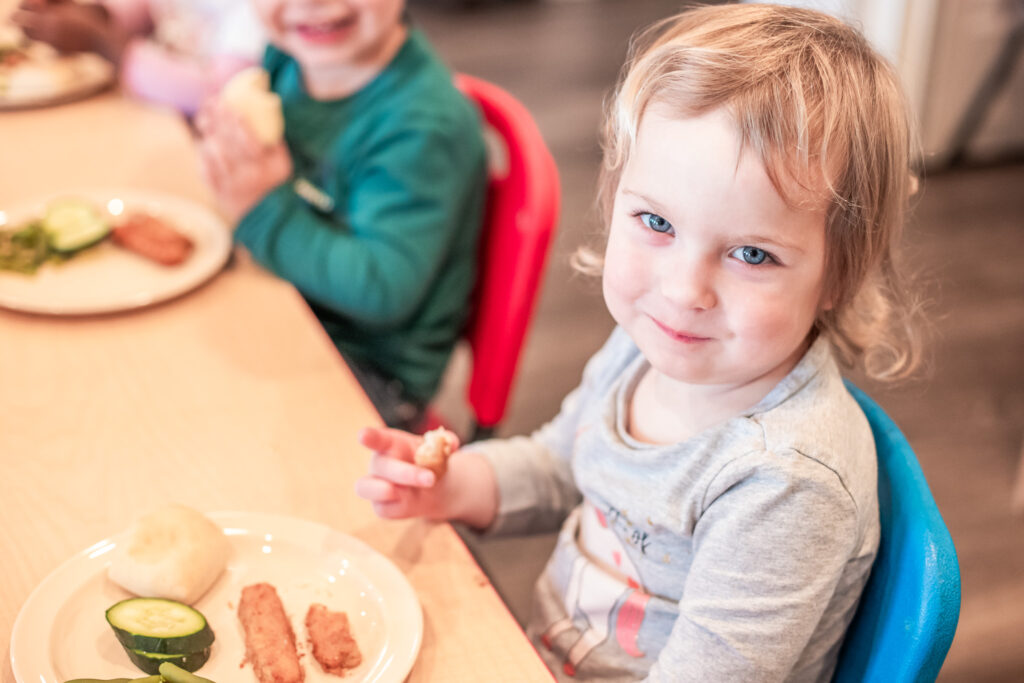
- Using a spoon or fork for feeding
- Drinking from a cup without a lid
- Helping with simple chores (ex: wiping tables)
- Understanding up to five rules
- Displaying an increasing independence with self-care
Cognitive Development
- Balancing while sitting up
- Drawing faces
- Imitating play of other children
- Pointing to body parts
- Showing interest in books
- Developing senses of smell, taste, touch, and hearing
- Associating the use of common objects
- Knowing that different activities occur at different times of the day
- Understanding the idea of waiting for someone else to go first
- Knowing where things belong
Physical Development
- Throwing a small object two feet
- Catching a rolled ball and rolling it forward
- Kicking a stationary ball
- Jumping on two feet
- Clapping with music
- Adjusting speed and direction while walking or running
- Turning a doorknob
- Turning single pages
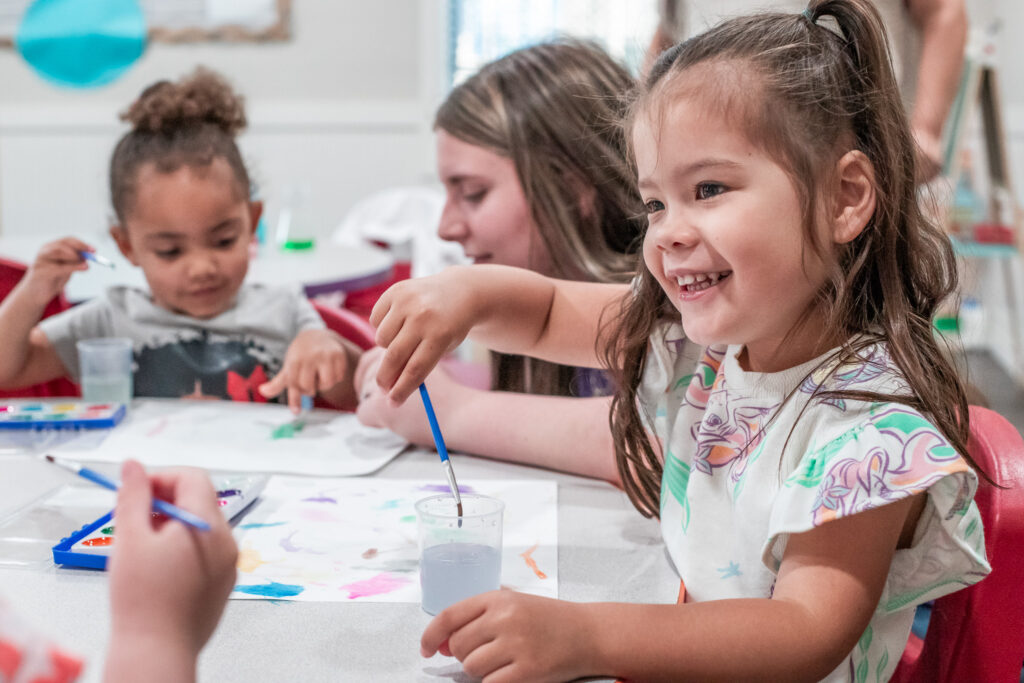
- Painting with a brush
- Coloring with a large crayon
- Assembling simple puzzles
- Building with blocks
- Screwing and unscrewing lids
- Rolling, pounding, squeezing, and pulling playdough
Social & Emotional Development
- Showing a positive attitude towards learning
- Playing well with others
- Valuing own property and naming personal belongings
- Showing pleasure in dealing with people and things
- Seeking help when needed
- Using role play to imitate behaviors of familiar adults
- Expressing a variety of emotions
- Saying “Please” and “Thank you” when reminded
Spiritual Teaching Objectives
- The Bible is one big story that tells us about God.
- God made the earth and everything on it, including you!
- God loves you.
- Praying is how we talk to God.
- Singing is how we celebrate God.
- Jesus died on the cross to forgive us for our sins.
- We get to Heaven by believing in Jesus – who He was and what He did for us.
Sample Young Preschool Classroom Schedule
| 7:00 | Breakfast and Open Centers |
| 8:00 | Circle Time and Community Challenge |
| 8:30 | Learning Stations/Small Group: Language/Literacy |
| 9:00 | Call to Prayer and Spiritual Development |
| 9:30 | Outside Exploration – Physical Development |
| 10:00 | Learning Stations/Small Group: Language/Literacy |
| 11:00 | Lunch |
| 11:30 | Naptime Prep |
| 12:00 | Nap/Rest Period |
| 2:00 | Rise & Shine and Snack |
| 2:30 | Learning Stations and Small Groups–Math/Reasoning |
| 4:00 | Outside Exploration – Physical Development |
| 4:30 | Circle Time Review and Story Time |
| 5:00 | Music & Movement |
| 5:30 | Teacher Choice Centers and Departure |